October 15, 2026
How to Select a PSA Nitrogen Generator for Stable Industrial Gas Supply
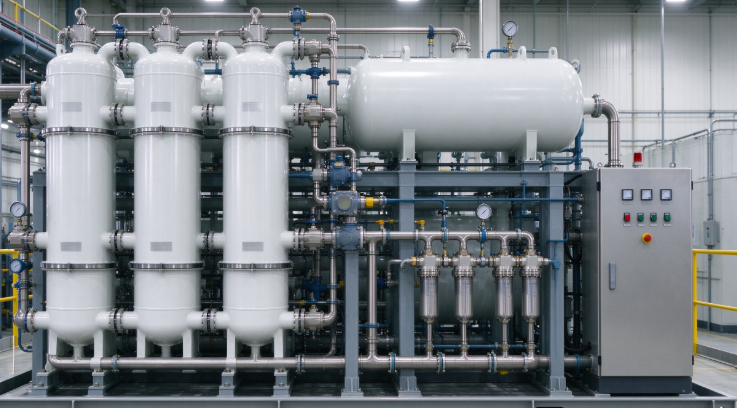
Table of Contents
· Why PSA nitrogen generation deserves a project-level review
· 1. Define nitrogen demand and purity
· 2. Check feed-air and site conditions
· 3. Review purification, controls and storage
· 4. Compare lifecycle and service requirements
· Illustrative application scenario
· Frequently Asked Questions
· Conclusion
· TDK
A PSA nitrogen generator separates nitrogen from compressed air through adsorption and regeneration cycles. It can provide on-site gas for processes that need a controlled nitrogen supply without depending entirely on delivered cylinders or liquid nitrogen. Sibikec Gas presents itself online as an industrial gas equipment manufacturer offering PSA nitrogen generators, oxygen generators and gas purification systems. Its website also describes nitrogen equipment for applications including electronics, food, chemical and pharmaceutical production. Exact flow, purity, pressure, energy use and certification must be confirmed for the selected project.
Why PSA nitrogen generation deserves a project-level review
The correct generator is determined by the process, not by a headline purity number alone. A packaging line may need a different flow pattern from a semiconductor process, laser cutting operation, heat-treatment line or food application. Demand can be continuous, intermittent or highly variable, and peak flow often matters more than average consumption.
Start with a process map: users, operating hours, pressure requirements, acceptable purity, backup arrangement and future expansion. This prevents a system from being sized only for today’s normal load while ignoring start-up, simultaneous users or planned production changes.
1. Define nitrogen demand and purity
Record normal flow, peak flow, pressure at the point of use, operating schedule and the number of users. If the process has short high-demand events, include their duration and frequency. A receiver tank may help smooth demand, but it should be designed around the actual cycle rather than added as a substitute for proper sizing.
Purity should be tied to process risk. Oxygen-sensitive electronics, inert packaging, chemical blanketing and metal processing may each require different oxygen limits and dew-point expectations. Ask the supplier to state how purity is measured, where the sample is taken and what conditions apply during start-up and changing load.
A useful RFQ can include long-tail terms such as on-site PSA nitrogen generator, industrial nitrogen generation system, nitrogen generator for food packaging and high-purity nitrogen purification equipment. The wording should describe the application instead of repeating a generic product name.
Design input | What to provide | Why it affects selection |
Flow demand | Normal, peak and future demand | Determines vessel, valve and compressor loading |
Purity target | Required oxygen level and test method | Links adsorption and purification to process risk |
Pressure | Generator outlet and point-of-use pressure | Affects compression, storage and distribution |
Air quality | Oil, water, particles and temperature | Protects adsorbent and stabilizes operation |
Operating pattern | Hours, starts, stops and backup | Influences controls, receiver size and service plan |
2. Check feed-air and site conditions
PSA performance depends on the compressed-air system feeding it. Confirm compressor type, available capacity, inlet temperature, pressure stability, oil carryover, liquid water and filtration. Poor feed air can shorten adsorbent life and cause unstable purity even when the generator itself is correctly selected.
Review the installation area, ventilation, noise limits, drainage, electrical supply, pipe routing and access for maintenance. The generator should be placed where filters, valves, analyzers and drains can be inspected without creating unsafe working conditions.
If the site already has a compressor room, check whether its control logic and maintenance schedule can support the new equipment. A generator project is a system upgrade, not only the purchase of a cabinet.
3. Review purification, controls and storage
Ask how the system protects against moisture, oil and particles, and whether additional nitrogen purification is required for the application. Sibikec’s public description mentions gas purification and nitrogen purification directions, but the actual train, materials and achievable specification should be written into the technical proposal.
Controls should show pressure, purity, alarms, cycle status and abnormal conditions in a way operators can understand. Confirm data logging, remote access, automatic restart behavior and the procedure for responding to an off-specification reading.
Storage and backup deserve the same attention. A receiver can support short demand peaks, while cylinders or another source may be required for maintenance or unexpected downtime. Define changeover responsibility and alarm escalation before commissioning.
4. Compare lifecycle and service requirements
Compare total operating cost, not only purchase price. Consider compressed-air consumption, electricity, filter replacement, analyzer calibration, adsorbent service, spare valves, planned downtime and technical support. Ask for the assumptions behind any consumption or capacity statement.
Request a clear acceptance plan: ramp-up time, purity stabilization, flow verification, pressure test, alarm checks, documentation and operator training. Keep baseline readings so later maintenance teams can identify drift instead of guessing.
Sibikec’s site states more than 20 years of industrial gas equipment experience and service to global markets. These are company-level website claims; the buyer should still confirm the responsible service team, response process, local support and project references for the intended region.
Illustrative application scenario
A food packaging plant wants on-site nitrogen for modified-atmosphere packaging. The team records packaging-machine demand, peak events, required purity, compressor air quality and backup expectations. The supplier proposes a generator, filtration and receiver arrangement, then validates purity at the point of use during a representative production run. This is an illustrative workflow, not a reported Sibikec project.
Frequently Asked Questions
Is PSA nitrogen suitable for every process?
No. Suitability depends on purity, flow, pressure, air quality, operating pattern and the consequences of off-specification gas.
What should be included in an RFQ?
Include demand profile, purity and test method, pressure, air source, site utilities, operating hours, backup needs, installation scope and acceptance criteria.
Why does compressed-air quality matter?
Oil, water and particles can damage filters or adsorbent and make purity unstable. Feed-air treatment should be part of the system review.
Do I need a receiver tank?
It may help with short peaks and cycle smoothing, but its size and purpose should be determined from measured demand and control requirements.
Conclusion
Selecting a PSA nitrogen generator is a process-engineering decision. Define demand and purity, verify feed-air and site conditions, review purification and controls, and agree acceptance and service responsibilities in writing. Use the Sibikec website as a starting point, then confirm project-specific data before purchase.