August 11, 2026
Reliable Industrial Gas Engineering Services & High-performance Auto Thermal Components
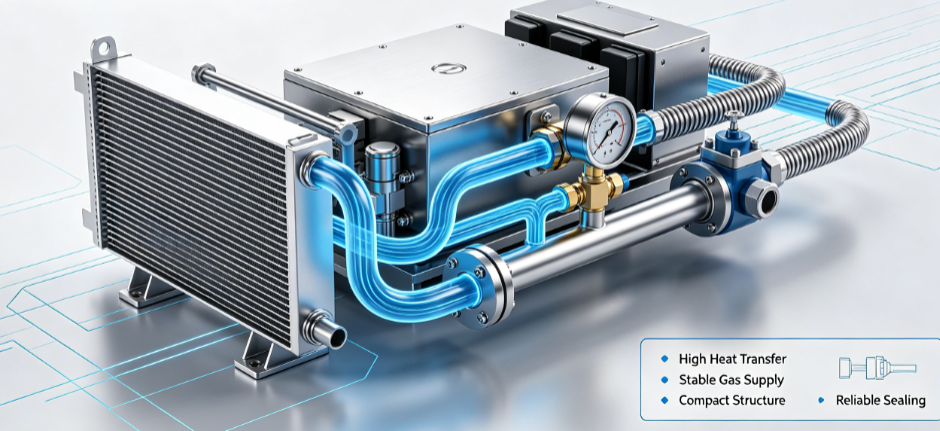
Reliable Industrial Gas Engineering Services & High-performance Auto Thermal Components
Table of Contents
1. Introduction
2. Main Business & Product Portfolio
3. Differentiated Technical Requirements for Two Core Business Lines
4. Core Competitive Advantages
5. Common Risks of Separated Suppliers for Gas Projects & Auto Thermal Parts
6. Data Comparison: Ordinary General Solutions VS Professional Gas Engineering & Premium Auto Thermal Components
7. Strict Whole-process Quality Control System
8. Typical Industrial Application Scenarios
9. Integrated Customized Service Workflow
10. Conclusion
11. Industry FAQ
1. Introduction
Modern manufacturing involves two vital supporting segments: industrial gas system construction and automotive thermal management components. Many manufacturers source gas engineering services and auto thermal parts from separate vendors, leading to disjointed technical standards, complicated coordination and extended project cycles.
We deliver reliable industrial gas engineering services together with high-performance automotive thermal components as a dual-line supplier. Our industrial gas engineering covers gas pipeline layout, gas station design, gas purification equipment, gas pressure regulation systems, installation, commissioning and after-sales maintenance, serving semiconductor, new energy materials, chemical processing and precision machining industries. Our high-performance auto thermal components include condensers, evaporators, heater cores and integrated heat exchangers for passenger vehicles, new energy vehicles and commercial vehicle thermal management systems. We support engineering turnkey projects, standardized bulk component supply and customized development, balancing stable gas supply safety and vehicle thermal system efficiency for equipment manufacturers, auto OEMs and industrial park operators.
This article introduces service scope, product specifications, technical standards and engineering matching principles, providing reliable procurement reference for industrial project contractors, automotive component purchasing teams and factory engineering management departments.
Core Industry Keywords: industrial gas engineering service, gas pipeline system, gas station equipment, automotive thermal component, auto condenser, evaporator, vehicle heat exchanger, new energy vehicle thermal management parts, industrial gas supply system, automotive air conditioning heat exchange assembly
2. Main Business & Product Portfolio
2.1 Industrial Gas Engineering Services
· Scheme design, flow simulation and layout drawing for industrial gas systems
· Gas storage station, gas mixing station, gas purification and drying equipment matching
· High-purity gas pipeline installation, pressure regulating cabinet, valve manifold box assembly
· Leak detection, system purging, commissioning, safety acceptance and long-term operation maintenance
· Gas monitoring, alarm interlock and safety protection system integration
2.2 High-performance Automotive Thermal Components
· Condensers, evaporators, heater cores for automotive air conditioning systems
· Integrated multi-flow heat exchangers for new energy vehicle thermal management modules
· Supporting spare parts: liquid storage dryers, expansion valves, connecting pipelines, mounting brackets
· Custom lightweight aluminum heat exchangers based on vehicle packaging space
Customization Options
For gas engineering: gas purity grade, pressure level, pipeline material, safety interlock configuration, fully automatic control scheme. For thermal components: heat exchange area, flow channel structure, anti-corrosion coating, interface size, mounting hole layout.
3. Differentiated Technical Requirements for Two Core Business Lines
3.1 Industrial Gas Engineering
· Strict gas tightness control to avoid medium leakage, explosion and poisoning risks
· Stable pressure and purity guarantee to meet precision production process requirements
· Complete safety interlock, monitoring and emergency protection configuration
· Clean construction standard for high-purity gas systems, prevent particle contamination
· Long-term system operational stability with convenient maintenance access
3.2 Automotive Thermal Components
· Sustained high heat exchange efficiency under vehicle vibration and temperature cycling
· Anti-leakage vacuum brazed structure, withstand refrigerant pressure fluctuation
· Excellent salt spray corrosion resistance adapting to complex road conditions
· Lightweight structural design matching vehicle energy-saving targets
· Consistent dimensional tolerance for automated assembly production
4. Core Competitive Advantages
4.1 Dual-line Professional Capacity
One supplier provides industrial gas engineering construction and automotive thermal component supply, simplifying enterprise multi-project procurement coordination.
4.2 Independent Technical Team for Each Field
Gas engineering team mastering fluid pipeline safety specifications; thermal component team possessing heat exchange simulation and vacuum brazing technology.
4.3 Flexible Customization Ability
Develop tailored gas system solutions and special heat exchangers according to process parameters and installation space constraints.
4.4 Unified Standardized Quality Management
Strict raw material screening, process supervision and full testing for engineering construction and component manufacturing.
4.5 One-stop Technical Support
Provide pre-sales scheme optimization, on-site implementation guidance and unified after-sales response for both businesses.
5. Common Risks of Separated Suppliers for Gas Projects & Auto Thermal Parts
5.1 Multiple technical standards difficult to coordinate
Different suppliers adopt inconsistent acceptance criteria, increasing overall project quality fluctuation.
5.2 Cumbersome communication and slow response
Separate contacts for gas engineering and auto parts extend fault handling cycle.
5.3 Difficult schedule synchronization
Gas project construction progress and component delivery cycle cannot be coordinated uniformly.
5.4 Lack of cross-domain integrated optimization
No overall suggestion linking factory gas production processes and vehicle component manufacturing demands.
5.5 Ambiguous liability division
When production failures relate to both gas supply quality and component performance, responsibility disputes easily occur.
6. Data Comparison: Ordinary General Solutions VS Professional Gas Engineering & Premium Auto Thermal Components
The table below summarizes test data collected from new energy manufacturing and automotive component projects.
表格
Inspection Item | Ordinary General Gas Engineering & Low-grade Thermal Parts | Reliable Industrial Gas Engineering + High-performance Auto Thermal Components | Industrial & Automotive Engineering Requirement |
Gas system annual leakage rate | Unstable, high hidden risk | Strictly controlled below standard threshold | Ensure safe continuous gas supply |
Thermal component heat efficiency retention after ageing | Obvious decline | Minor attenuation, stable cooling performance | Consistent vehicle air conditioning effect |
Thermal part vibration fatigue cycle life | 80,000 ~ 150,000 cycles | ≥300,000 cycles | Prevent refrigerant leakage during driving |
Gas pipeline cleanliness & particle content | Risk of contamination | Meet high-purity process standards | Avoid precision equipment workpiece defects |
Salt spray resistance of auto heat exchangers | 240–480 h | ≥800 h with anti-corrosion coating | Adapt to coastal and harsh road environments |
Multi-supplier management workload | High | Single supplier unified coordination | Optimize enterprise supply chain cost |
Data clearly demonstrates that matching industrial gas engineering services and high-performance automotive thermal components from one professional supplier reduces multi-party coordination risks and improves overall stability of production and vehicle assembly.
7. Strict Whole-process Quality Control System
7.1 Raw Material Incoming Inspection
Gas pipeline, valve, filter material verification; aluminum sheet, brazing material and coating raw material inspection for heat exchangers.
7.2 Process Patrol Monitoring
Gas pipeline welding, purging and leak detection tracking; heat exchanger stamping, vacuum brazing and surface treatment sampling.
7.3 Semi-finished Product Verification
Gas pressure resistance & helium leak testing; heat exchanger air tightness and fin forming inspection.
7.4 Comprehensive Performance Testing
Gas system linkage safety interlock test; thermal component heat exchange efficiency, vibration ageing and salt spray test.
7.5 Final Acceptance Check
Gas project overall commissioning acceptance; finished heat exchanger appearance, dimension and electrical performance screening.
7.6 Complete Batch & Project Document Archiving
Construction records, material certificates and test reports archived for long-term traceability.
8. Typical Industrial Application Scenarios
Industrial Gas Engineering Application Scenarios
· New energy material factories, lithium battery production high-purity gas supply systems
· Semiconductor, optoelectronic workshop gas station and gas pipeline projects
· Precision machinery, welding workshop compressed gas and shielding gas engineering
· Chemical, environmental protection industrial gas storage and pressure regulating systems
Automotive Thermal Component Application Scenarios
· New energy passenger vehicle air conditioning condensers, evaporators and integrated heat exchangers
· Traditional fuel vehicle cabin heating and cooling heat exchange assemblies
· Commercial vehicles, construction machinery cab air conditioning radiator parts
· Aftermarket replacement high-performance automotive AC heat exchange components
9. Integrated Customized Service Workflow
1. Communicate production process parameters, gas purity & pressure requirements, vehicle thermal load and installation space limitations
2. Complete gas system layout design, thermal component structural simulation and issue quotation
3. Confirm technical scheme and drawings; arrange material procurement and production scheduling
4. Carry out gas engineering construction, component processing and offline testing
5. On-site installation, system commissioning and joint acceptance
6. Hand over operation manuals, test reports and spare parts list
7. Long-term after-sales maintenance, technical transformation and product iteration service
10. Conclusion
Industrial gas supply infrastructure and automotive thermal management components are essential supporting facilities for new energy, semiconductor and auto manufacturing industries. Separated procurement from multiple vendors easily leads to inconsistent standards, coordination difficulties and hidden safety risks.
We provide integrated solutions combining reliable industrial gas engineering services and high-performance automotive thermal components. Professional gas pipeline construction guarantees safe, stable and clean gas supply; premium vacuum brazed aluminum heat exchangers achieve efficient heat exchange and long anti-corrosion service life. One-stop cooperation simplifies enterprise supply chain management and shortens project implementation cycles.
Factory operators, auto component manufacturers and engineering contractors are advised to select integrated suppliers with dual professional capabilities to reduce overall project risks.
11. Industry FAQ
Q1: What types of industrial gas projects can you undertake? A: High-purity nitrogen, oxygen, argon, hydrogen, special mixed gas station design, pipeline installation, pressure regulating system and safety interlock integration.
Q2: Can thermal components be customized for new energy vehicle integrated thermal management systems? A: Yes. Multi-flow integrated heat exchangers can be developed to realize simultaneous cooling of battery, motor and air conditioning circuit.
Q3: What core tests will be performed on automotive heat exchangers before delivery? A: Air tightness pressure test, heat exchange efficiency sampling test, vibration ageing and salt spray corrosion testing.
Q4: Can gas engineering realize automatic monitoring and remote alarm? A: We can configure flow, pressure, leakage monitoring sensors and cloud remote alarm linkage systems.
Q5: Can small pilot gas projects and prototype heat exchanger samples be supported before large-scale investment? A: Small-scale gas system pilot construction and thermal component prototype trial production are both available for process verification.